


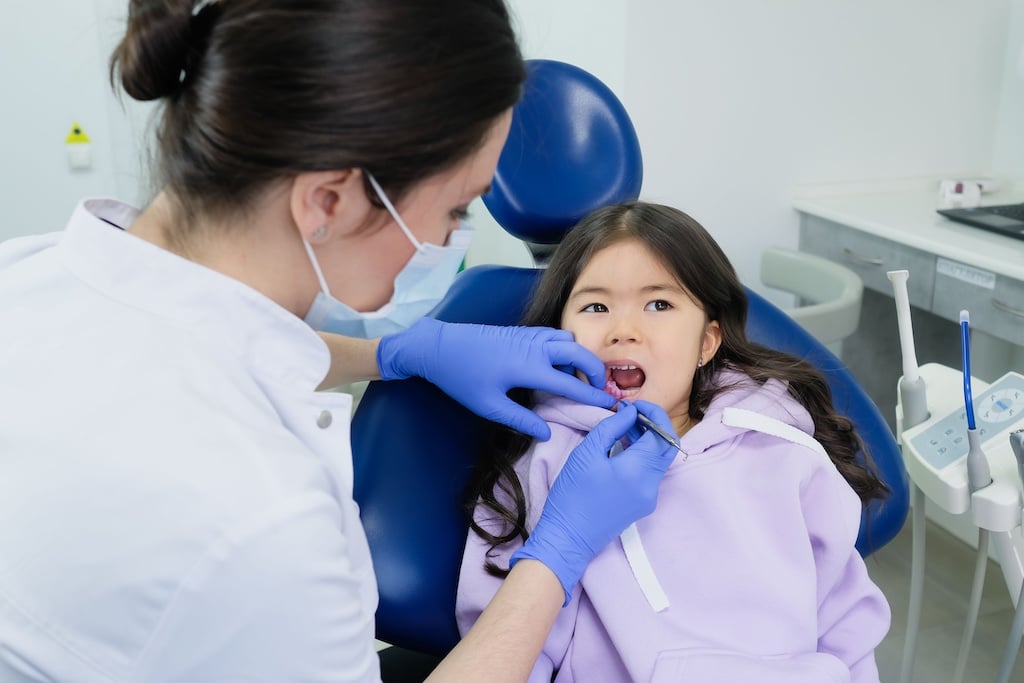
For most parents, orthodontics isn’t something that lands on the calendar. It usually starts smaller than that – with something you catch out of the corner of your eye.
Maybe a new tooth is coming in behind another instead of where you’d expect. Maybe your child’s bite looks a bit off compared to their friends or siblings. Sometimes it’s your dentist who plants the seed and mentions getting an orthodontic opinion. And sometimes there’s no obvious trigger at all – you just want the reassurance that your child’s smile is going where it should.
That’s when the question tends to surface: “When should my child see an orthodontist?”
It’s a fair thing to wonder. Nobody wants to miss something that turned out to matter, but you also don’t want to hurry your child into treatment they were never going to need.
Dr. Angela Abiusi at Palm Beach Orthodontics sees parents land here constantly. A good number of them walk in braced for a conversation about, well, braces. Usually the first visit ends up being about something more helpful – getting a clear read on what’s happening and what to expect from here.
Sometimes that points toward treatment. Sometimes it means watching how things grow. And sometimes it’s just the good news that your child is developing exactly as they should. What matters most is having someone with enough experience to know which of those it is.
The Right Time Is About Development, Not Just Age
A lot of people assume there’s no point seeing an orthodontist until all the permanent teeth have finally shown up. It’s probably the most common mix-up out there.
The truth is orthodontists look at far more than whether teeth are straight. They pay attention to how the jaws are growing, how the bite is coming together, how the adult teeth are pushing through, and whether there are early signs worth keeping an eye on.
Which is exactly why timing counts for so much.
Dr. Angela often puts it to families this way: orthodontics isn’t really a simple thumbs-up or thumbs-down on treatment. It’s about working out when treatment – if any is needed – will actually do the most good.
Sooner isn’t always the smarter move. But leave it too long and you can miss a helpful window. The aim is to find the point that makes sense for that one particular child.
When Should a Child First See an Orthodontist?
So when should a child first see an orthodontist? The general guidance points to a first evaluation somewhere around age seven.
For a lot of parents, that sounds early. Plenty of seven-year-olds still have a mouth full of baby teeth and look nowhere near ready for braces.
But that age gives an orthodontist plenty to go on. Dr. Angela can see how your child’s teeth and jaws are developing, check whether there’s going to be enough room for the adult teeth, and note anything worth following.
A first visit doesn’t mean treatment kicks off. In fact, a lot of the children who come to Palm Beach Orthodontics at this age don’t need anything done right away. They simply enter a monitoring phase, where Dr. Angela tracks their growth and only recommends treatment once the timing genuinely lines up.
For parents, that takes a lot of pressure off. You’re not committing to anything. You’re just making sure someone who knows what to look for is keeping an eye on how your child is developing.
Every Child’s Smile Develops Differently
Comparing is one of the most natural things parents do.
A friend’s child might already be in braces. An older sibling may have needed treatment at a certain age. And then there’s the child who ends up with straight teeth and never once sits in an orthodontist’s chair.
Here’s the thing, though – children grow on their own schedules. Two kids the same age can have completely different needs. One might benefit from a little early guidance, while another just needs time to catch up. Crowding turns up quickly in some children; in others, the changes arrive so slowly you barely notice.
That’s why Dr. Angela won’t shape a plan around age alone. She looks at the child actually in front of her – the growth, the bite, how things are unfolding, and what’s going to give the best result years down the line.
The question worth asking isn’t “When did that other child start?” It’s “What does this child need, and when will it help them most?”
What Happens During an Orthodontic Evaluation for Kids?
An orthodontic evaluation for kids is mainly there to give you a clear picture.
At the appointment, Dr. Angela takes her time getting familiar with your child’s smile and walks you through what she’s noticing. She looks at tooth alignment, jaw development, how the bite fits together, spacing, and any habits that might steer things later on.
Just as usefully, she’ll tell you what doesn’t need worrying about. Quite a few parents come away feeling more relaxed than they expected, simply because they finally understand what’s going on in there.
At Palm Beach Orthodontics, the point was never to go hunting for a reason to start treatment. It’s to make the right call for your child, whatever that turns out to be.
That might mean starting treatment. It might mean circling back in a year. Or it might mean heading home glad to hear everything’s tracking the way it should.
Why Continuity Matters During Childhood Orthodontics
A child’s smile keeps changing as they grow, so who’s watching that development makes a real difference.
At Palm Beach Orthodontics, Dr. Angela stays with her patients herself. Families don’t get passed around between different providers who have to relearn a child’s history every time they walk in. That continuity is what lets the small shifts get spotted. Dr. Angela already knows where your child started, what’s moved since, and what’s likely around the corner.
And for parents, that adds up to something that can matter every bit as much as the treatment itself – trust.
When to Take a Child to an Orthodontist
Parents searching for when to take a child to an orthodontist are usually after one neat age or one obvious sign that says it’s time. The honest answer is that no single rule fits every child.
If your child is roughly seven, if your dentist has raised the idea of an assessment, or if something about their smile or bite has been quietly bothering you, an evaluation can tell you a great deal.
None of it is about rushing. It’s about understanding. Dr. Angela’s take is that parents deserve thoughtful guidance, honest answers, and a plan built around what’s genuinely best for their child.
Because good orthodontic care was never about treating kids as early as you possibly can. It’s about recognizing the moment when treatment – or sometimes just careful monitoring – will make the biggest difference.
Frequently Asked Questions
At What Age Should I Start Looking For Orthodontic Issues?
Around age seven is when many orthodontists suggest a first assessment. At that point, an orthodontist can study the developing teeth and jaws and figure out whether anything needs watching or treating later on.
How Do Orthodontists Decide When Treatment Should Begin?
Plenty feeds into the timing – jaw growth, how the teeth are erupting, the way the bite is developing, spacing, and the specific needs of the child. Dr. Angela takes in the whole picture before she suggests a starting point.
Is Orthodontic Care Different For Each Child?
It is! Every child develops differently, so orthodontic care shouldn’t run on a fixed, one-size-fits-all timeline. The recommendations come down to each child’s smile, growth pattern, and long-term needs.
Can Orthodontic Treatment Affect My Child’s Daily Routine?
Most children adjust pretty fast. There may be a few small changes to how they eat or brush, but with a little support they tend to settle in without much trouble.
How Often Will My Child Need Orthodontic Appointments?
That depends on whether your child is being monitored or is actively in treatment. Dr. Angela will put together a schedule that suits your child’s stage of development and what their care actually needs.
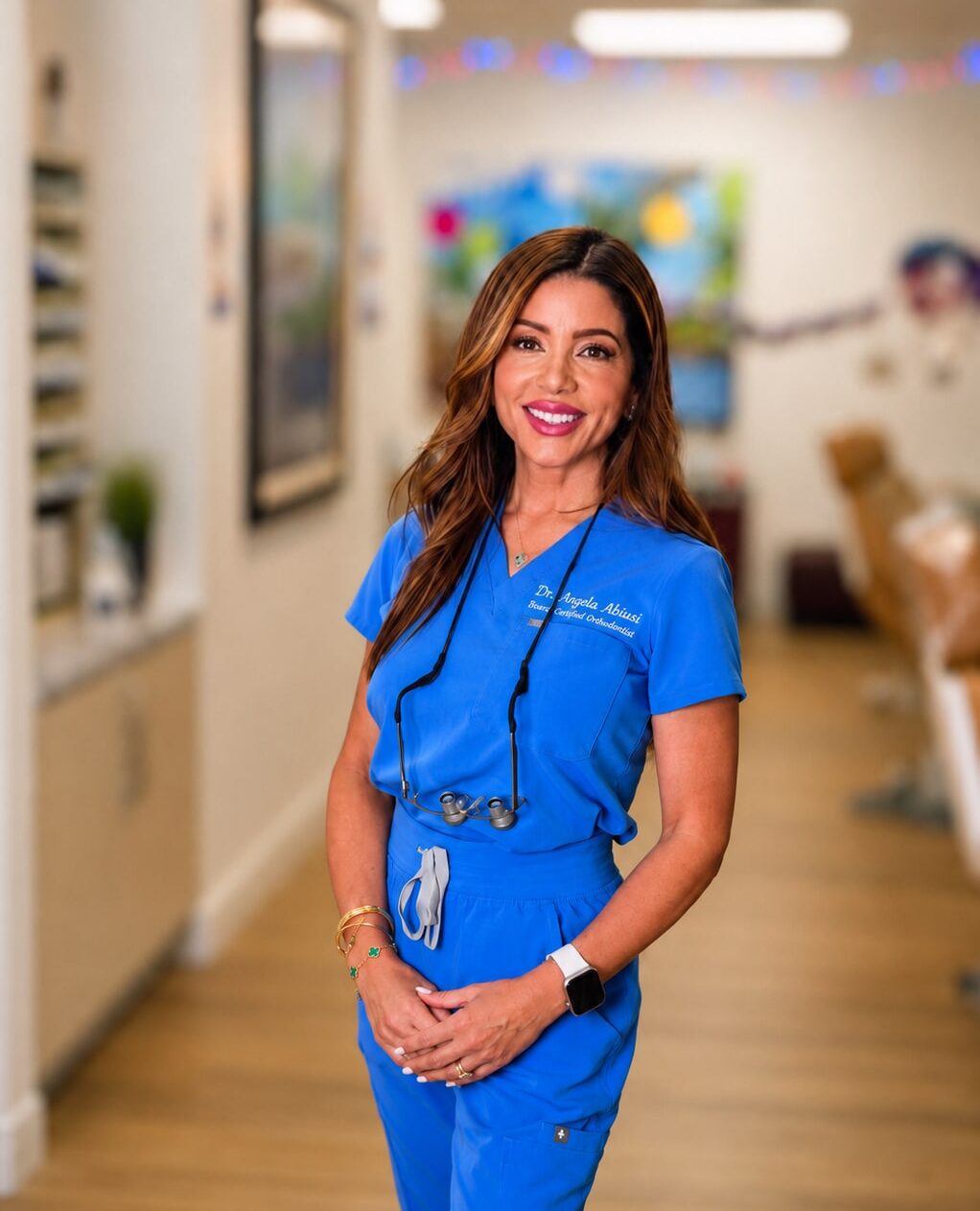
Dr. Angela is a board-certified orthodontist and the founder and owner of Palm Beach Orthodontics, with offices in Palm Beach Gardens and Royal Palm Beach. With more than 20 years of experience, she provides consistent, doctor-led care for children, teens, and adults using braces and Spark clear aligners. She was named Orthodontist of the Year in Palm Beach Gardens by the Consumer Ratings Institute, a review-based award.
Find Dr. Angela on Healthgrades, WebMD, and the American Association of Orthodontists.